


A used furniture buying checklist helps you look beyond attractive photos and decide whether a sofa, table, bed or storage unit is worth its asking price. Before contacting a seller, confirm that the furniture fits your room, can pass through your doorway and will not cost more than expected after transport, cleaning and repairs.
At the viewing, inspect structural condition before appearance. Test the frame and joints, examine wood for moisture or pests, and check upholstery for stains, odours, sagging and damaged seams. Confirm what the sale includes and who will arrange collection or delivery.
This guide gives you a practical process for evaluating second-hand furniture in Kenya before paying. Keep it open during the viewing or save the final checklist for later. When you are ready to compare available pieces, browse second-hand furniture on Juuhudi.
Quick used furniture buying checklist
Check | What to do | Why it matters |
|---|---|---|
Room size | Measure the intended floor and wall space. | The furniture must fit without obstructing movement. |
Access route | Measure doors, corridors, stairs and lifts. | A suitable piece is useless if it cannot enter your home. |
Full cost | Add transport, cleaning and likely repairs to the price. | A low asking price can become expensive after collection. |
Structure | Test the frame, legs, joints and weight-bearing areas. | Movement or cracking can indicate structural damage. |
Surfaces | Look underneath and behind for stains, moisture, holes and repairs. | Important defects are often hidden from listing photographs. |
Included parts | Confirm all cushions, shelves, fittings and accessories. | Missing parts can affect usability and replacement costs. |
Exchange plan | Agree on inspection, payment, collection and delivery. | Clear arrangements prevent misunderstandings and wasted journeys. |
Measure the furniture and its route into your home
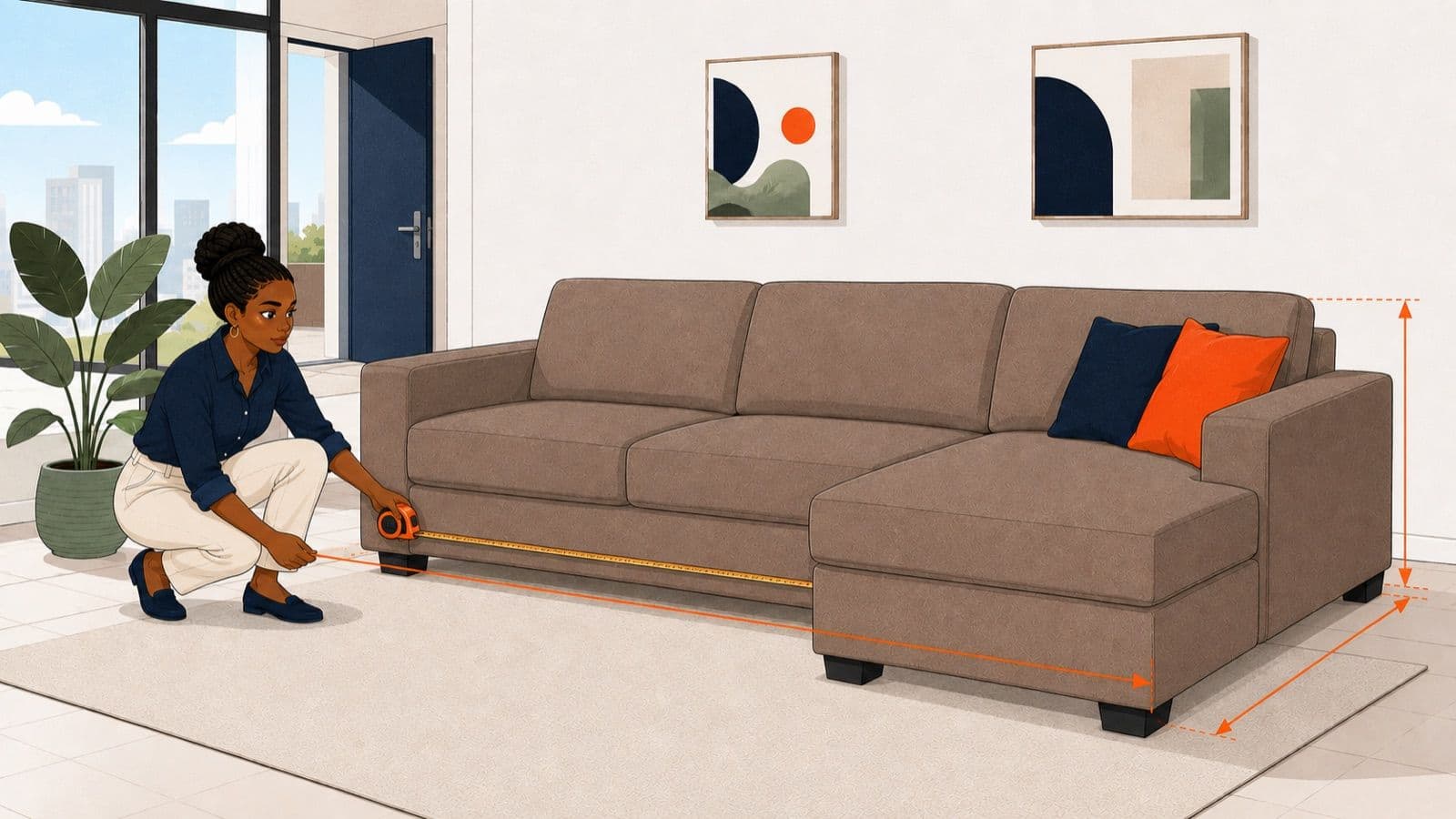
Measure the intended space before arranging a viewing. Record its maximum width, depth and height while leaving room to open doors, pull out chairs and move comfortably. Then measure the entire access route, including entrances, corridors, staircases, corners and lift doors.
For an L-shaped sofa, ask for the length of both sections, overall depth and back height. Confirm whether the chaise sits on the left or right when facing the sofa. The wrong orientation can block a doorway or cross the room even when the headline dimensions appear suitable.
Ask whether the sofa separates and request the dimensions of its largest individual section. Check whether legs, arms or other parts can be removed safely for transport. Do not assume that movers can dismantle the item without damaging it.
Before confirming the purchase, compare:
- The furniture's full dimensions
- The largest section after dismantling
- The narrowest doorway or corridor
- Staircase width and turning space
- Lift dimensions and weight restrictions
- Space in the collection vehicle
If any measurement is close, measure the item yourself before paying. A few centimetres can decide whether a sofa reaches your living room or remains outside the building.
Calculate the complete cost before deciding
The asking price is only one part of buying second-hand furniture. Calculate what it will cost to collect, transport, clean and prepare the piece for use. A cheap sofa can become expensive when it requires difficult transport, professional cleaning or structural work.
Use this calculation:
Complete cost = asking price + transport + carrying fees + cleaning + repairs + replacement parts
For example, the L-shaped sofa listed at KSh 42,000 would cost KSh 47,000 if hypothetical transport and cleaning quotes were KSh 3,000 and KSh 2,000. Repairs would raise the total further.
Cost | Example amount |
|---|---|
Asking price | KSh 42,000 |
Transport quote | KSh 3,000 |
Professional cleaning | KSh 2,000 |
Estimated complete cost | KSh 47,000 |
Get a transport estimate before committing. Provide both locations, furniture dimensions, floor numbers, lift availability and whether the item separates. Confirm whether the quote includes carrying, loading, unloading and reassembly.
Separate cosmetic work from essential repairs. A washable mark may be manageable, but a weak frame, broken joint, damaged leg or collapsed cushion needs immediate attention. Ask about known repairs and inspect them yourself.
Compare the complete cost with similar used listings and a realistic new alternative. Juuhudi's second-hand price calculator can provide a starting estimate, which you should adjust for condition, materials, completeness and demand.
Set your maximum total budget before negotiating. Walk away if the purchase, transport and necessary work exceed it; a discount does not make unsuitable furniture good value.
Inspect the frame, joints and stability
Clean furniture can still hide structural problems. Start with the frame, legs and joints because they determine whether the piece can continue supporting weight safely. Ask permission before sitting on, lifting or moving it.
Check whether the furniture sits level without leaning or loading one leg. Look underneath for missing screws, cracked supports, fresh glue, bent brackets or added reinforcement. A repair is not automatically disqualifying, but you should know what was repaired and whether it remains secure.
Sit on every position of a sofa or armchair. Compare the support, watch for frame movement and listen for repeated cracking or grinding. Apply light pressure to the arms and back; excessive movement may indicate loose joints or internal damage.
Test dining chairs individually by sitting carefully and shifting your weight slightly. The chair should not twist, and the backrest should remain firm where it joins the seat. Press gently near each table corner to check that its legs are stable. For beds, inspect the central support, side rails, slats and connection points, and confirm that every fitting is present.
Watch for:
- Cracks through a leg or supporting rail
- Joints that move independently
- Missing bolts, brackets or slats
- A frame that twists under light pressure
- Uneven legs that cannot be corrected easily
- Loud cracking under ordinary weight
- Repairs concealed with fabric, paint or temporary supports
Photograph defects and estimate repairs before negotiating. Cosmetic wear may be manageable; a failing frame can make an attractive piece unsafe or uneconomical.
Check wooden furniture for damage, moisture and pests
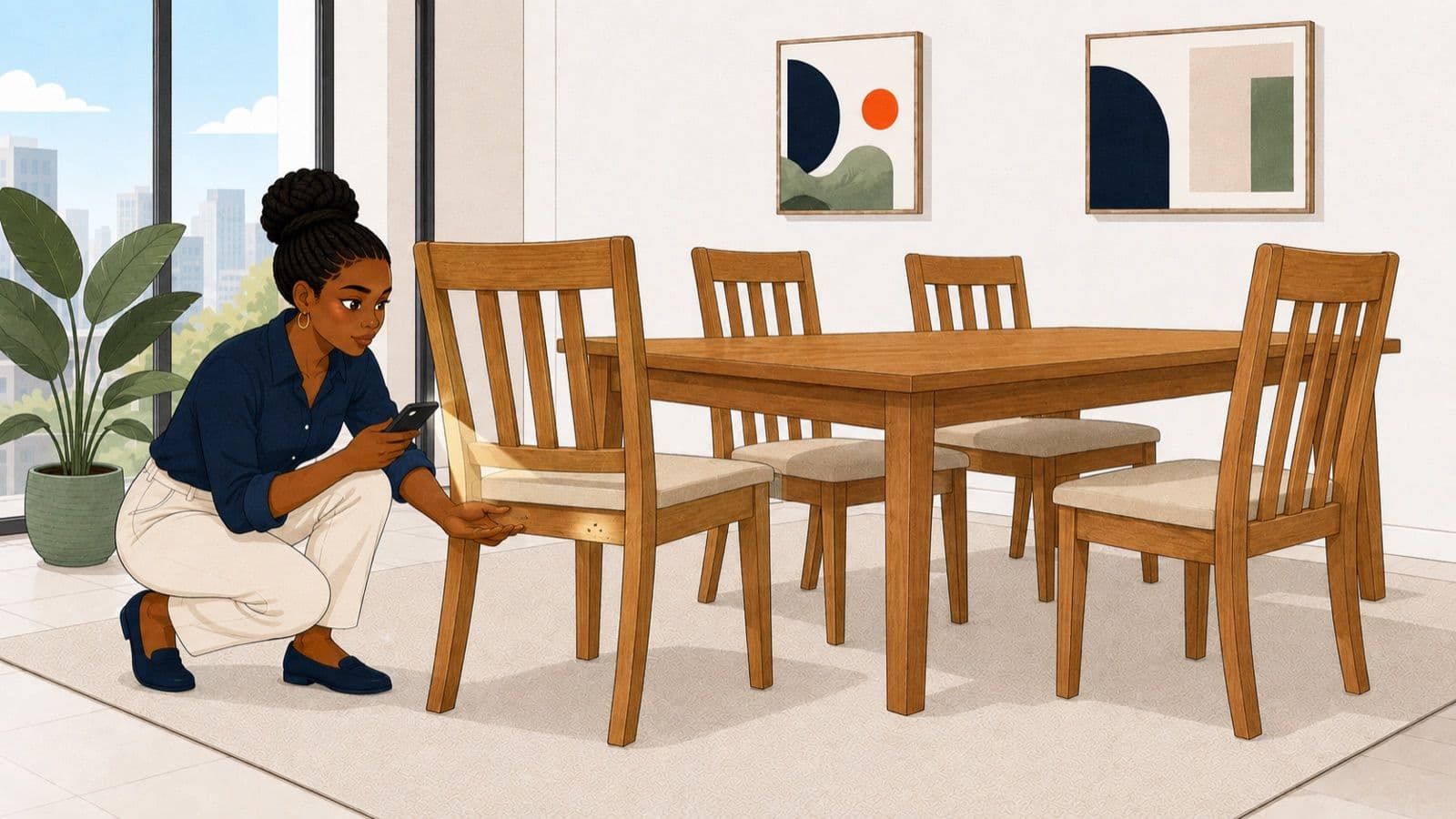
Inspect wooden furniture from every side, including hidden areas. Use bright light or a phone torch beneath tabletops and chairs, inside drawers, around joints and behind larger pieces.
For a mango wood dining set, view the tabletop from a low angle to find warping, deep scratches, water marks or refinished areas. Check the edges for splitting and the leg connections for movement. Test every chair because one damaged chair affects the value and usefulness of the set.
Possible signs of pest activity include:
- Small holes in the timber
- Fresh powder or dust beneath the item
- Hollow or weakened areas
- Channels or damaged edges
- Loose joints without an obvious cause
- Insect remains around hidden surfaces
Old holes do not necessarily mean pests remain active, but fresh dust or continuing damage requires investigation. Ask when the signs appeared and whether the item was treated. If you cannot rule out termites, wood borers or other pests, seek professional advice before taking it home.
Check for moisture damage, including swelling, soft areas, dark patches, mould, peeling finishes and persistent musty smells. Pay particular attention to furniture stored against walls, near windows or outdoors. Particleboard and MDF may remain weak after absorbing water even when the surface appears dry.
Distinguish surface wear from structural damage. Light scratches and faded finishes may be inexpensive to address; deep cracks, severe warping, active pests or weakened joints can make the purchase poor value. Include any treatment, refinishing or repair in your complete-cost calculation.
Inspect upholstery, cushions and seams
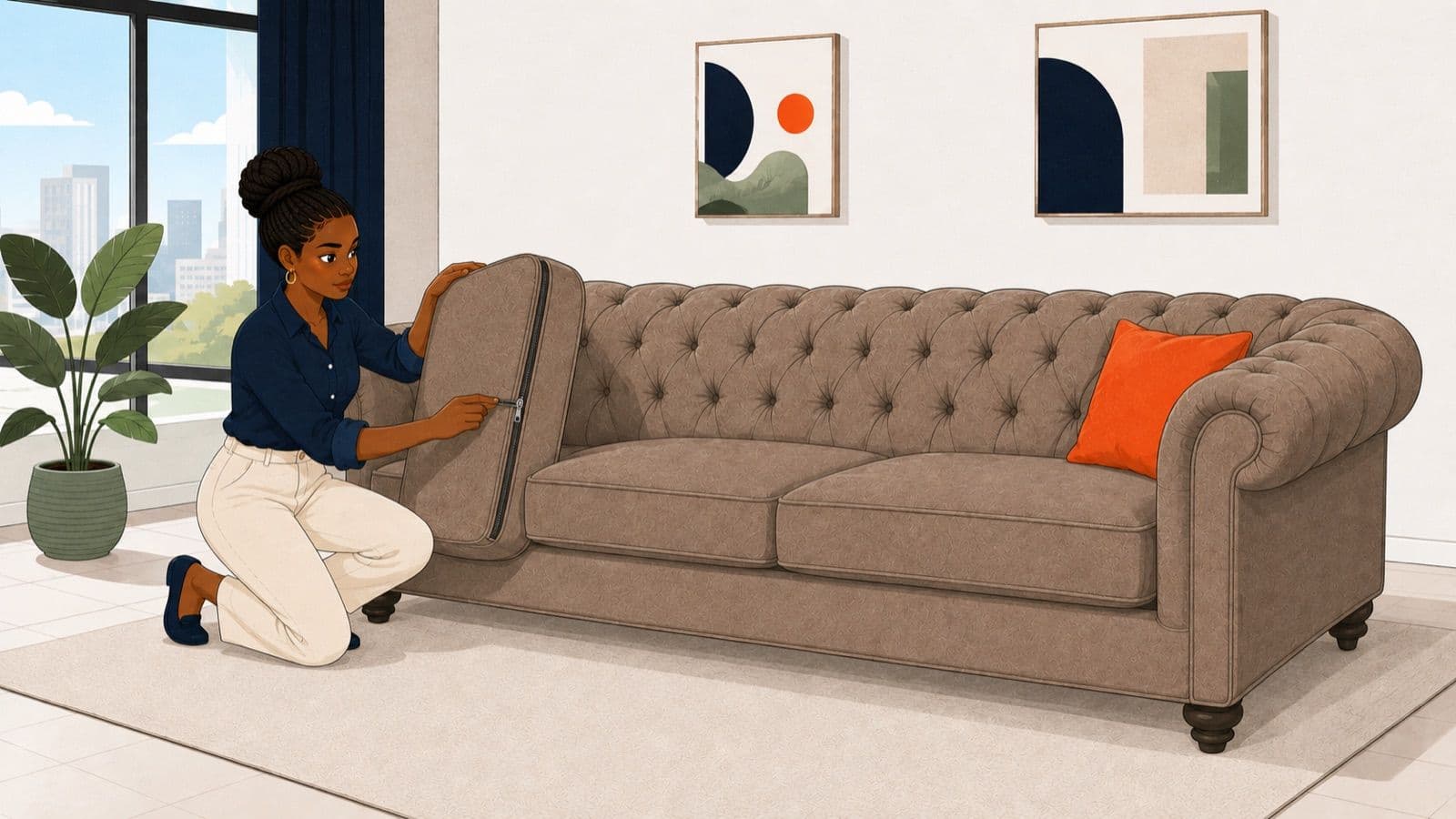
Fabric can conceal stains, damaged padding, weak springs and pests, so inspect upholstered furniture in good light and from several angles.
For a five-seater Chesterfield sofa set, examine the tufting, buttons, seams, arms, back and lower edges. Missing buttons, stretched stitching or separating seams may worsen with use. Confirm that the photographed throw pillows are included.
Sit on every section and compare the support. Cushions should recover after you stand. A seat that sinks much lower than the others may have compressed foam, damaged webbing or weak springs. Scraping, popping or grinding can indicate a hidden problem.
If cushions are removable, inspect both sides and the zips. Ask whether the covers are washable and whether any filling has been replaced. Colour differences may reveal fading, spot cleaning or replacement fabric.
Use a phone torch to check:
- Seams, folds and buttoned areas
- Gaps beneath removable cushions
- The back and underside
- Corners where fabric meets the frame
- Tears, burns, stains and earlier repairs
- Unusual spots, shed material or live insects
Damp, smoke and musty odours can be difficult to remove. Strong perfume may also mask the natural condition. If you see possible signs of bedbugs or other pests, do not rely on surface cleaning; obtain a professional assessment before taking the item home.
Get realistic cleaning or reupholstery quotes before negotiating. Dust or a removable mark may be manageable, while damaged padding, widespread odours, failing seams or full reupholstery can materially change the value.
Confirm exactly what the sale includes
Ask the seller to list every part included in the asking price. Listing photographs may contain decorations that are not included, while essential fittings may be stored separately and remain unseen.
For a dining set, confirm the number of chairs, extension leaves, covers and fittings. For the Chesterfield set, confirm the sofa pieces and pillows. For an L-shaped sofa, establish whether the sections separate and whether connectors, legs and hardware are included.
Ask through Juuhudi messaging:
- How many separate pieces are included?
- Is everything visible in the photographs included?
- Are any cushions, shelves, screws or fittings missing?
- Has any original component been replaced?
- Can the item be dismantled for transport?
- Are tools or special fittings required for reassembly?
- Is delivery included or priced separately?
- Will the furniture be assembled for inspection?
Keep the answers in the conversation. For a large set, write a short inventory such as "one table, six chairs and all assembly bolts" instead of relying on the listing title.
At the viewing, compare the furniture with the photographs and inventory. Open drawers, count shelves, match cushions and test connections. If it is dismantled, ask to see every panel, support and bag of fittings, then photograph the connection points for reassembly.
Count everything again during collection. Store screws, brackets and keys in a labelled bag. If a promised component is missing, pause the exchange and agree on a revised price or collection plan before paying.
Know when to walk away from used furniture
Minor scratches, fading and fabric wear may be acceptable when disclosed, repairable and reflected in the price. Walk away when a problem affects safety, cleanliness, usability or the true cost of ownership.
Serious condition warnings include:
- Active pests or unexplained fresh wood dust
- Strong damp, mould, smoke or chemical odours
- A cracked, twisting or unstable frame
- Severe water damage, swelling or decay
- Seats that collapse under ordinary weight
- Missing structural fittings that prevent testing
- Damage hidden or contradicted by the listing
- Repairs that cannot be estimated confidently
Pause if the seller demands payment before inspection, requests an unexplained deposit or prevents important checks. Also reconsider when the item differs materially from its photographs, the seller changes agreed terms or cannot explain visible repairs.
Question | Walk away when… |
|---|---|
Is it safe and stable? | The frame or supporting parts appear unreliable. |
Can it be cleaned? | Pests, mould or persistent odours may remain. |
Can it be repaired? | The work is uncertain or disproportionately expensive. |
Does it match the listing? | Important damage or missing parts were not disclosed. |
Does it fit? | The item cannot follow your access route. |
Is the total cost reasonable? | Purchase, transport and repairs exceed your budget. |
Do not let excitement or travel time pressure you into buying. If uncertain, photograph the problem, calculate the complete cost and consult a cleaner, carpenter, upholsterer or pest professional. A trustworthy seller should allow time for a considered decision.
Inspect and complete the exchange safely
Arrange the viewing through Juuhudi messaging and keep the item, price, time, location and included parts in the conversation. Share only the personal information necessary for the exchange.
Bulky furniture may need to be viewed at the seller's home. Visit during daylight, take another adult and tell someone you trust where you are going. For smaller items, consider a busy public location. Review Juuhudi's buying and safety guidance before meeting.
During the viewing:
- Compare the item with its photographs
- Complete all condition and measurement checks
- Confirm the included pieces and fittings
- Agree who will dismantle and carry it
- Confirm the final price before payment
- Leave if the item or situation feels wrong
Do not send money merely to reserve unverified furniture. Be cautious if the seller changes the recipient or meeting location unexpectedly or pressures you to act quickly.
For an electronic payment, enter the number yourself and confirm the displayed recipient and amount before approving. Rely on the confirmation on your own phone, not another person's screenshot.
Coordinate the transporter so the item can leave after payment. Count every component before loading and retain the Juuhudi conversation and payment confirmation. Afterward, leave an honest review of the listing accuracy, communication and handover.
Final used furniture inspection checklist

Save this checklist on your phone or print it before viewing a second-hand sofa, table, chair, bed or storage unit. Work through it in order and record anything that may affect safety, usability or price. Take measurements, photographs and transport quotations for larger purchases, and allow enough time to inspect without pressure.
Before the viewing
- Confirm the seller's location and viewing time.
- Ask for the furniture's width, depth and height.
- Measure your room, doors, corridors, stairs and lift.
- Confirm all pieces and accessories included.
- Ask about damage, repairs, stains, pests and odours.
- Obtain an initial transport estimate.
- Calculate your maximum complete budget.
During the inspection
- Compare the item with its listing photographs.
- Check that it sits level and does not twist.
- Test the frame, legs, joints and supports.
- Inspect underneath, behind and inside.
- Look for moisture, mould and possible pests.
- Test every seat, cushion, drawer, door and moving part.
- Confirm every promised fitting and accessory.
- Photograph defects that may need cleaning or repair.
Before paying
- Recalculate the total cost.
- Confirm the final price and collection plan in writing.
- Check that dismantling and transport are practical.
- Verify the payment recipient and amount yourself.
- Count every piece before loading.
- Walk away if the item or exchange feels wrong.
Frequently asked questions about buying used furniture in Kenya
Is it safe to buy second-hand furniture in Kenya?
It can be safe when you verify the listing, inspect the furniture physically and complete the exchange carefully. Check its structure, surfaces and included parts before paying. Arrange a daytime viewing, take someone with you and retain important details in Juuhudi messaging. Walk away if the seller prevents inspection, pressures you to prepay or unexpectedly changes the agreement.
How can I tell whether a used sofa is still strong?
Sit on every section and compare the support. The frame should remain stable without twisting, excessive movement or repeated cracking. Apply light pressure to the arms and back, then inspect underneath for broken supports, loose joints, missing fittings and concealed repairs. Uneven or deeply sagging seats may indicate problems with springs, webbing or cushion filling.
How do I check used furniture for termites or bedbugs?
Use bright light to examine wooden joints, fabric seams, cushion gaps and the underside. Look for small holes, fresh wood dust, live insects, shed material, dark spotting or unexplained damage. Old marks do not always mean active pests, but uncertainty deserves caution. Seek a qualified pest professional's assessment before bringing a suspicious item home.
Who should pay for used-furniture delivery?
There is no universal rule. Agree before payment who will arrange and pay for dismantling, carrying, transport and reassembly. Ask whether delivery is included or offered separately. Obtain a written quotation using both locations, floor numbers, lift access and the furniture's dimensions so unexpected charges do not undermine the purchase.
How much should I pay for second-hand furniture?
Start with comparable current prices, then adjust for age, materials, condition, completeness and demand. Include transport, cleaning, repairs and replacement parts in your budget. Juuhudi's second-hand price calculator provides a starting estimate, but your decision should reflect the item's physical condition and complete cost rather than its asking price alone.
Find second-hand furniture that fits your home and budget
Ready to use the checklist? Browse second-hand furniture on Juuhudi, compare suitable pieces and message sellers privately. If you are unsure what an item may be worth, begin with the second-hand price calculator before arranging a viewing.